


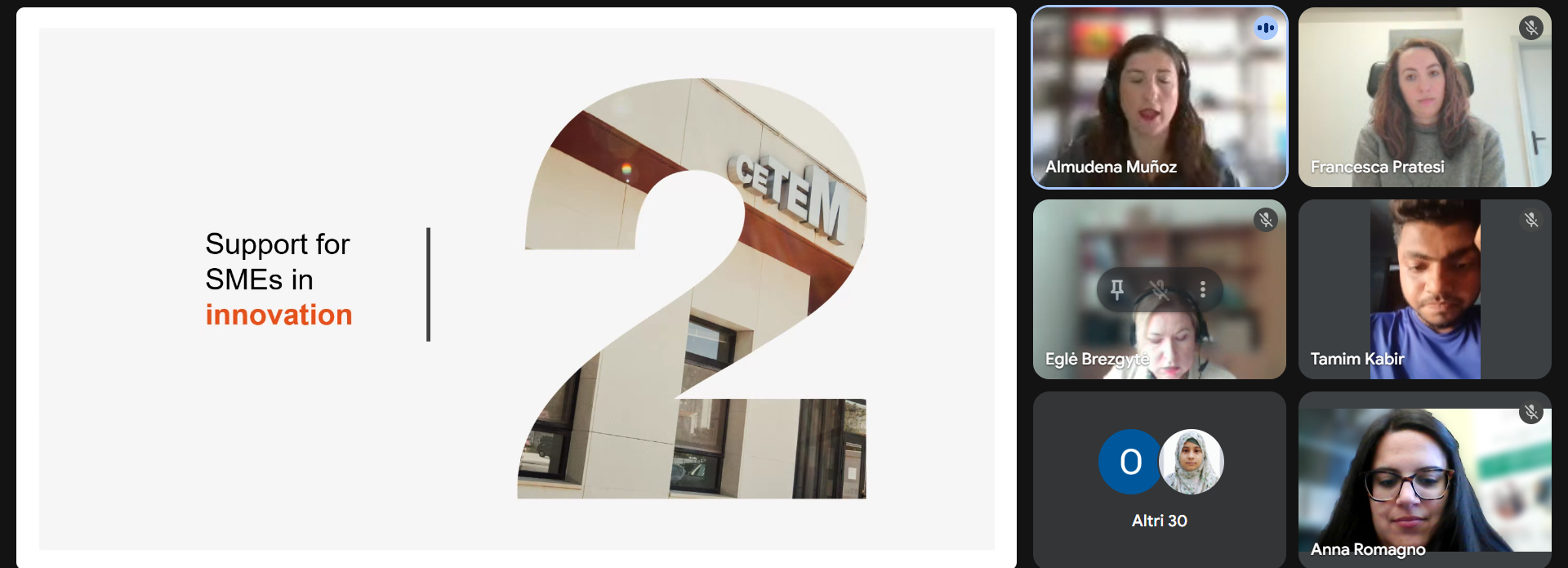
This question was at the core of our recent SAM Experience webinar, “The Role of an Artificial Intelligence Project Implementation Manager in Companies: A Practical Experience”. Beyond discussing roles or technical frameworks, the session opened a broader reflection on how organizations collaborate in increasingly complex and technology-driven ecosystems.
Sustainable alliances are not built on transactions—they are built on shared intent. Companies that move beyond short-term collaboration begin to understand partnerships as learning systems: environments where knowledge flows, capabilities evolve, and trust is strengthened over time. From CETEM’s perspective, this is especially relevant in innovation projects, where collaboration is essential to transform technological potential into real industrial impact.
For students, this also represents a shift in mindset. Engaging with organizations is no longer only about gaining experience, but about contributing to value creation and becoming active participants in long-term transformation.
However, sustainability in alliances today cannot be separated from digital responsibility, particularly in the context of artificial intelligence. As organisations increasingly rely on data-driven tools, new challenges emerge around ethics, transparency, and accountability. How can AI systems support better decision-making without compromising trust? How do we ensure that implementation processes are aligned with responsible and human-centred principles?
These questions are not theoretical. They are part of the daily reality of companies integrating AI into their operations. As highlighted during the webinar, the role of the AI Project Implementation Manager becomes critical—not only to ensure technical deployment, but also to bridge strategic, ethical, and organizational dimensions.
What clearly emerged is that the future belongs to those able to align three key dimensions: purpose, partnerships, and digital awareness. Organizations must intentionally design collaboration ecosystems where these elements reinforce one another. At the same time, future professionals need to develop not only technical expertise, but also the critical thinking required to navigate these challenges responsibly.
At CETEM, we understand alliances not as static structures, but as evolving relationships. We actively promote collaboration models where innovation, trust, and responsibility go hand in hand. The invitation remains open to organizations willing to rethink how they collaborate, and to students ready to engage beyond traditional roles.
Because the real question is no longer whether we collaborate—but how consciously we choose to do it.
Almudena Muñoz Puche
International Projects
CETEM
Written by Mondragon Unibertsitatea team (MUE) and Almudena Muñoz Puche (CETEM – Associate Partner), Spain