


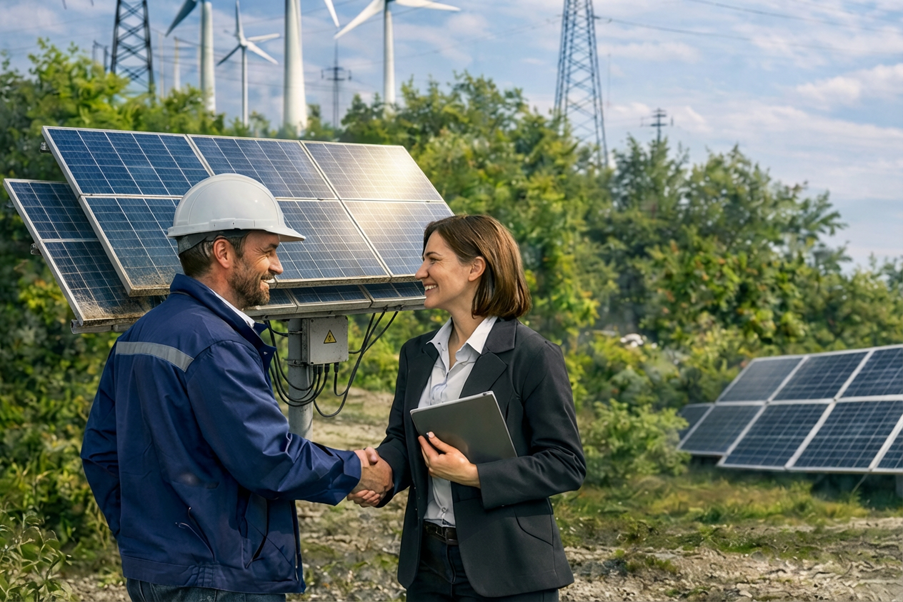
The necessary changes and adjustments associated with the green transition pose a significant challenge for small and medium-sized enterprises, which generally do not have the same financial, organisational and technological capabilities as large economic entities (European Commission, 2021). At the same time, many SMEs face similar barriers to development, which means that creating alliances between them could enable not only the aggregation of demand, but also the effective pooling and sharing of resources (European Commission, 2021).
In order to better understand the obstacles faced by SMEs in this area, an attempt was made to assess the key problems encountered by SMEs in five European countries – Poland, Spain, Romania, Italy, and Lithuania – in the context of their efforts to achieve a green transition. This objective was achieved by seeking answers to the following research question: What challenges do companies currently face in the process of building strategic alliances with other partners aimed at achieving global sustainable business goals? This article presents the challenges identified in three Polish SMEs.
One of the most frequently identified challenges in the process of achieving sustainable development goals through strategic cooperation is high investment costs. These relate to both the implementation of modern, energy-efficient technologies and the modernisation of technical infrastructure. This is a significant constraint for small and medium-sized enterprises, especially when the return on investment is long-term and spread over time, which complicates the decision-making process regarding involvement in strategic alliances.
Another significant challenge is the instability and complexity of the regulatory environment. Frequent changes in energy efficiency and environmental protection regulations require constant updating of knowledge and adaptation of operational processes. For SMEs, this means additional organisational costs and increased staffing burdens, which can weaken their ability to engage in long-term partnerships.
Limited human and competence resources, typical for the SME sector, also remain a significant barrier. Small teams of employees must simultaneously carry out day-to-day operational tasks and engage in development activities related to sustainable development. In addition, resistance to change among some employees, especially the departure from traditional working methods, can slow down the process of implementing innovative and environmentally friendly solutions within strategic alliances. Employee resistance to change may be the result of one or more factors and their combination: for instance, substantive change in job responsibilities, psychological threat, disruption of social conditions, or misunderstanding of the issue (Warrick, 2023). In addition, change procedures in organisations, due to their complexity and ambiguity, generate even greater challenges. Change is an integral part of 21st-century organisations, so it must be managed consciously, and employees must be informed and supported in this regard so that they can better understand and then accept it (Warrick, 2023).
Market instability, manifested in fluctuations in the availability and prices of raw materials and supplies, is also a significant challenge. This kind of unpredictability increases investment risk and hinders the planning of long-term projects carried out jointly with partners, including projects focused on green transformation.
In the context of strategic cooperation for sustainable development, there are also difficulties in measuring and monitoring the effects of actions. The lack of adequate systems for collecting data on carbon footprint, energy consumption or waste reduction, as well as vaguely defined key performance indicators (KPIs), make it difficult to assess the progress and effectiveness of initiatives. As a result, this may undermine trust between partners and limit the sustainability of alliances.
The insufficient environmental awareness of some customers and investors is also significant. The preference for low initial costs and short lead times over long-term environmental and operational benefits means that demand for sustainable solutions is sometimes limited. The lack of a clear market signal weakens companies’ motivation to engage in green strategic alliances and makes it difficult to justify their economic rationality.
In an environment of increasing volatility, uncertainty, complexity, and ambiguity (VUCA), as well as brittleness, anxiety, nonlinearity, and incomprehensibility (BANI), further exacerbated by geopolitical tensions and economic instability, small and medium-sized enterprises are increasingly recognising that operating independently does not always provide sufficient resilience. In such circumstances, cooperation within strategic alliances becomes not only a tool for development, but above all a condition for survival, enabling the achievement of a minimum but necessary level of profitability and operational stability (Lupédia, Tănașcu, Statie, Costache, 2023).
Written by the University of Economics in Katowice team (Poland)
References:
- European Commission (2021). Strategic alliances for the uptake of advanced technologies by SMEs, https://eismea.ec.europa.eu/news/strategic-alliances-uptake-advanced-technologies-smes-2021-12-06_en [available: 04.02.2026].
- Lupédia, G. D.C., Tănașcu, C.J., Statie, D.A., Costache, R.A. (2023). Age of Economic Alliances – How SMEs Win the Market Using Alliances in Turbulent Times, “European Journal of Sustainable Development” , 12, 2, pp. 151-160, Doi: 10.14207/ejsd.2023.v12n2p151.
- Warrick, D. D. (2023). Revisiting resistance to change and how to manage it: What has been learned and what organizations need to do. Business Horizons, 66(4), 433–441, https://doi.org/10.1016/j.bushor.2022.09.001.